A year on LinkedIn, 226 engagements, zero reposts
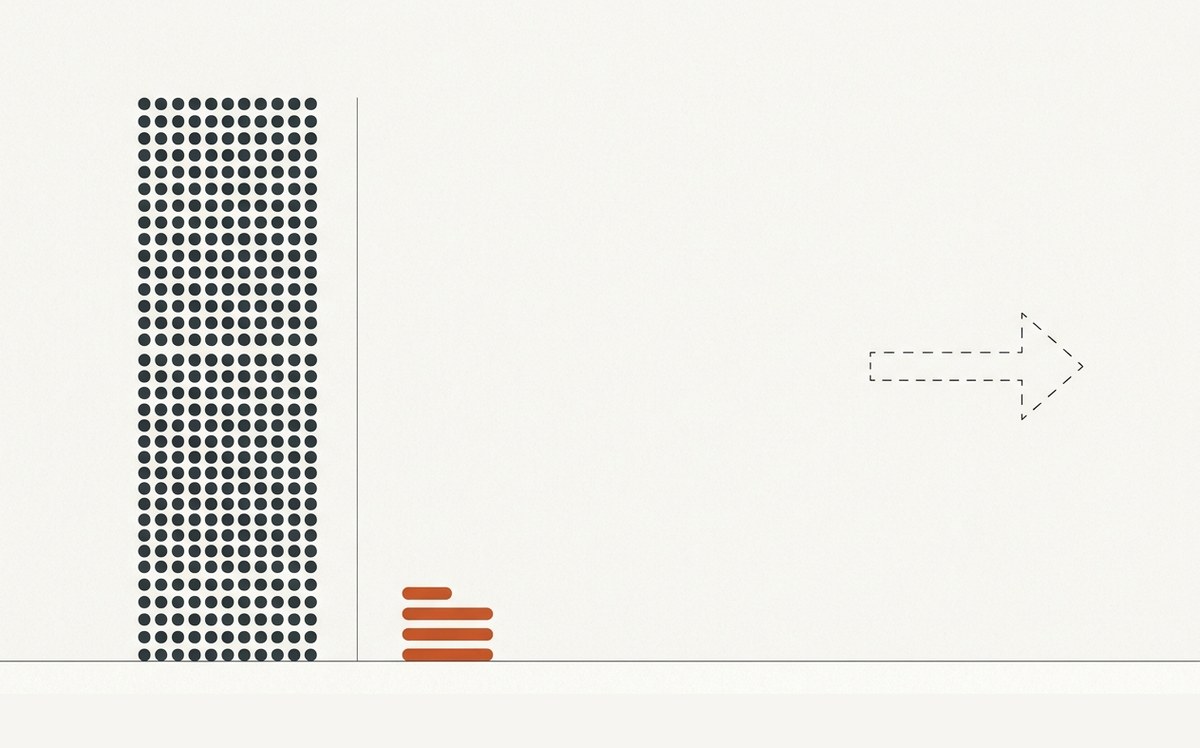
I will start with my own numbers, because an audience is easier to take apart when it is yours. Over twelve months of posting: 14,306 impressions, 6,080 members reached, 226 engagements. Of those 226, 189 reactions, 28 comments, and zero reposts.
Zero. Not one, across a full year. That is the most useful number of the set, and it is the one nobody looks at.
A reaction is politeness, a repost is a risk
Clicking a thumb costs half a second and commits to nothing. Reposting puts someone's own name on your point, in front of their own network. It is the only metric on the platform that asks a person to take a risk for you.
A year without a repost does not say the content is bad. It says it was not useful enough to anyone to be passed on. Those are two very different diagnoses, and the second one is fixable.
The post that taught me most is the one that worked best
My best post over the period is a human story. Around 2,000 impressions, 46 engagements. The second is another story: 1,000 impressions, 43 engagements. The third is a generic lesson about emerging markets, the kind everyone publishes: 998 impressions, and 5 engagements.
Look at the ratio. The third post reaches almost as many people as the second and triggers nearly nine times less conversation. The reach was there. What was missing was a reason to reply.
A generic lesson hands the reader information they already hold, phrased in a way that commits them to nothing. A story hands them a situation they recognise, and a reason to say « that happens here too ».
My audience was not my target, and it was measurable
The demographics of my readers over the same period: Paris as the first location, advertising services as the first industry, founder as the first job title.
I position myself as a fractional CMO in African markets, working with executive teams. My actual audience was therefore mostly European and mostly from the agency world, which is to say my peers rather than my clients.
That is no surprise once you know the mechanism. A LinkedIn audience builds by sedimentation from every job you have held. Mine carried fifteen years of agency work in France and the Indian Ocean. It described my past faithfully and my offer not at all.
The starting baseline, for scale
Before the profile rebuild: 4,706 followers, 37 profile views over seven days, 3 post impressions over seven days. A four-figure follower base producing three impressions a week is a dormant asset, not an audience.
That is the follower-count trap. It reads like capital while it behaves like a mailing list nobody has opened in years.
What I am changing, and what I am not
I am not trying to fix the demographics with paid targeting. I tested that reasoning elsewhere and it does not hold, for reasons I set out in another note.
What I am changing comes down to three things. I am stopping lesson posts, which cost the same effort and return twenty times less conversation. I write from situations that are dated, quantified and named, including the ones that do not flatter me. And I measure reposts rather than reactions, because a repost is the only thing that carries a point beyond its own network.
What I am not changing: I do not signal availability through the platform's own features. A current client who sees that signal does not read it as looking around, they read it as leaving.
The useful question
If you post on LinkedIn for your company or for yourself, open your twelve-month analytics and look for one line: how many reposts. Then open the demographics and compare the first industry listed with the industry you want to serve.
Those two numbers tell you most of what matters, and neither is the one the platform puts in front of you.
Going further: the method, and the case study the editorial and LinkedIn system on a B2B infrastructure.
Is your audience your target? Request a Growth Audit