Before 2015: what I built alongside the agency
From 2012 to 2014, in Reunion Island, I ran digital at Saatchi & Saatchi. On the side, I built projects: an incubated startup, an accelerator model, two web contests, and a seat in the island's association of digital companies.
I tell them here with what worked and what stalled. The material comes from my archives of the time: decks, contracts, meeting notes.
IntraTag, 2012-2014: finding your way inside a building without GPS
In late October 2012, at the Reunion Island Startup Weekend in Saint-Denis, I pitched an idea: guide someone inside a building with their phone, where GPS does not reach. The team had 54 hours to work on it. The project won the event.
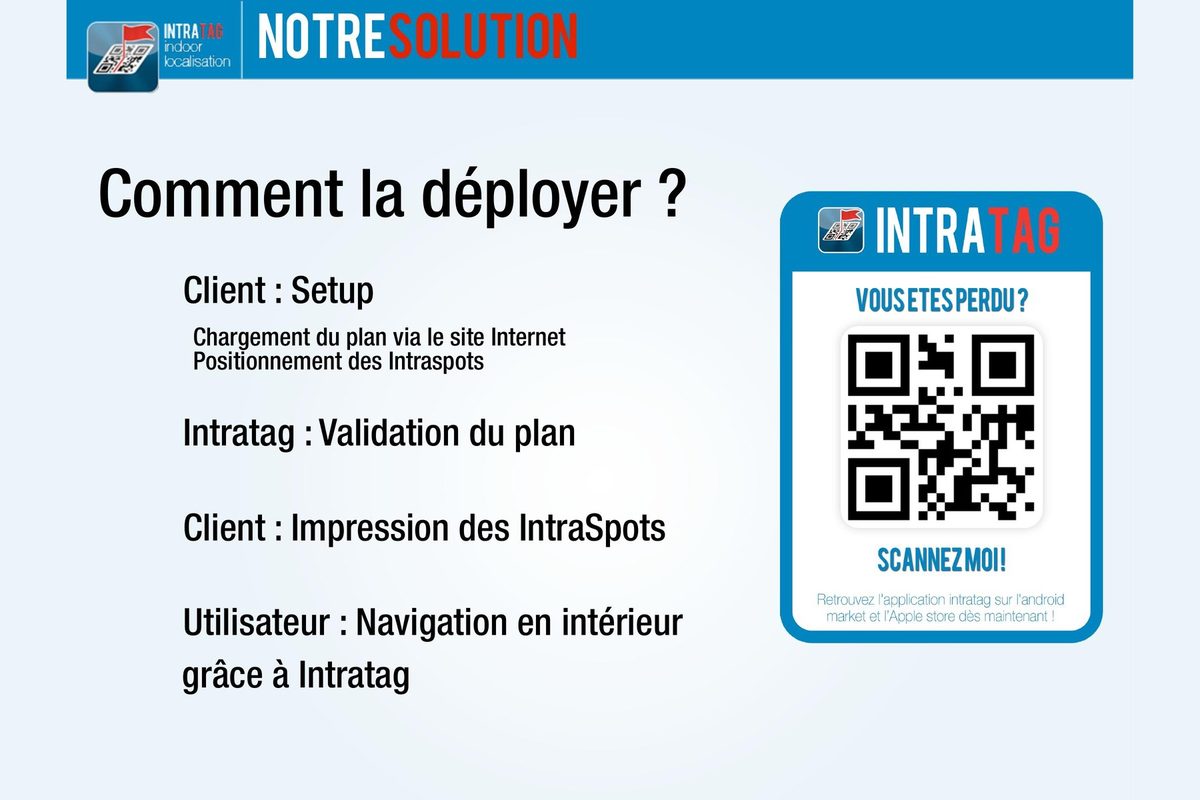
The principle was simple. Printed signs carrying a QR code, the IntraSpots, placed at key points in the building. The app reads the sign, knows the floor plan, and works out the route to the destination. It needs neither wifi nor sensors. The target: places open to the public, supermarkets, hospitals, museums, stadiums, hotels, trade fairs. The model: free for the visitor, paid by the venue, with a trial of five IntraSpots.
In June 2013, the project entered the Reunion Technopole incubator, led by me with Jean-Michel Trayaud and Marine Soichot, on a validated incubation budget of 53,900 euros before tax. The routing engine was contracted to the computer science and mathematics lab of the University of Reunion Island, under a 15,000-euro research contract.
What stalled
By August 2014, the project had stopped. The development contractor and the lab had not managed to work together, and the specification was on hold. Two lab deliverables were still missing. I put a schedule back in place: every deliverable to the Technopole in early September, the contractor tender right after, and a target close at the end of November.
Looking back, the problem was not technical. There were many of us around the project, all partners, and all already busy with other projects. It lacked a real owner, someone to carry it through to the end. To me, that is what makes a startup succeed.
Kerozen, November 2013: carrying projects past the weekend
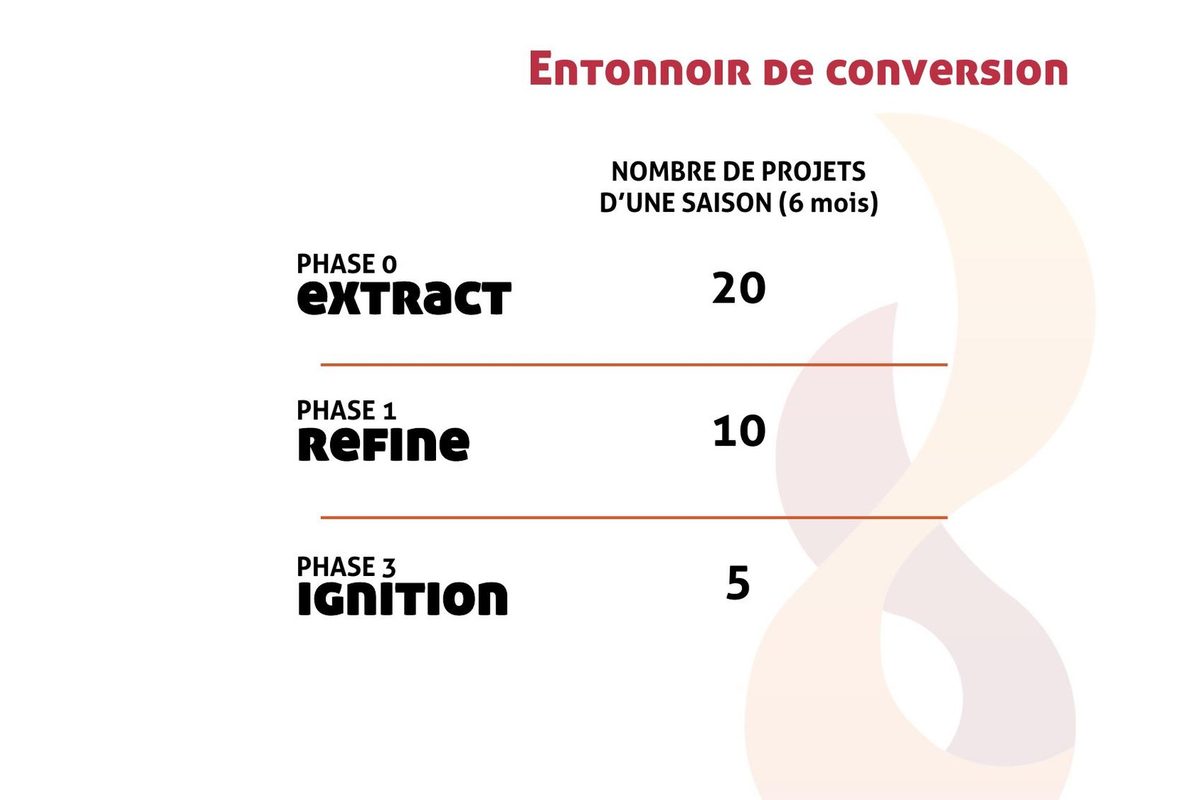
A year later, at the island's third Startup Weekend, part of the same team came at the problem from the other end. A project born in 54 hours often dies the following Monday. Kerozen proposed to carry it afterwards, in six-month seasons: twenty projects spotted, ten worked on with coaches in law, finance, development and communication, five launched. IntraTag was the example: through the Startup Weekend, then into incubation.
The pitch asked for 300,000 euros of investment and projected, over three years, a portfolio of stakes valued at 576,000 euros, before any breakout project. I handled marketing and communication.
The WebCup, 2013 and 2014: 24 hours to deliver a website
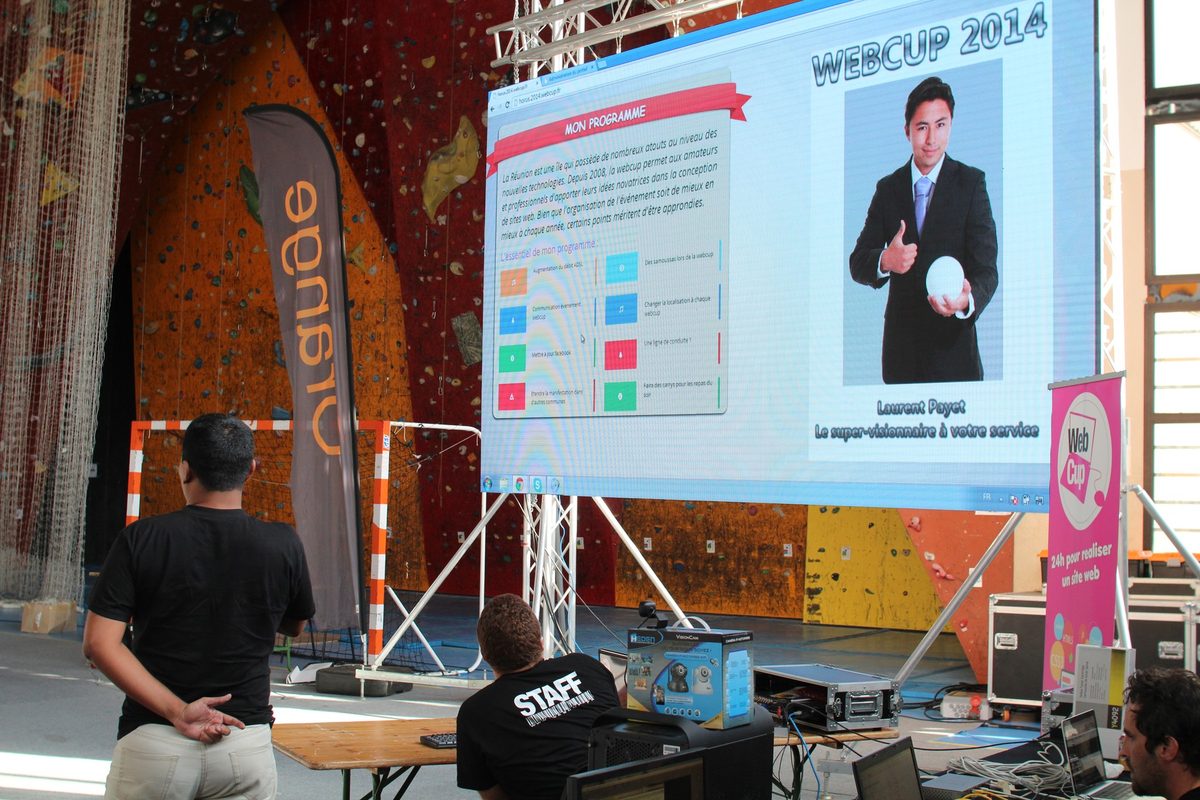
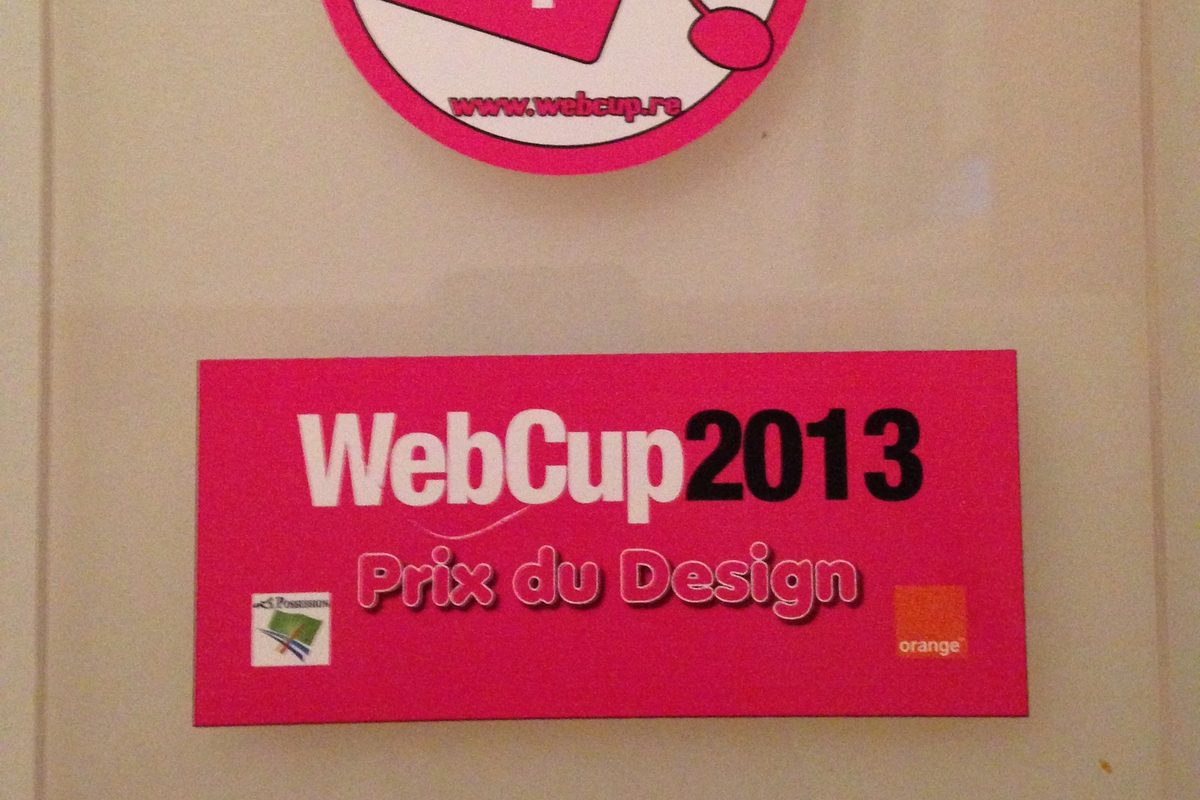
The WebCup is a web contest held in Reunion Island: teams, a set brief, 24 hours to deliver a website in front of a jury. I competed with the agency's digital team. In 2013, we received the design award. In 2014, we won.
My role in the team was content architecture: what the site says, in what order, and what the jury sees first. Design and code were in other hands.
ARTIC, 2014: the island's digital sector
In 2014, I chaired the software college of ARTIC, Reunion Island's information-technology association. It brings together the island's digital companies and carries their shared files, from overseas tax rules to employment.
That year, the board aimed for 120 members, a fifth of the sector. At the July seminar, the workshop on jobs and skills produced three work streams: a map of training courses on the island, the adaptation of a national framework of digital jobs, and the promotion of work-study contracts to companies.
In May 2014, at ARTIC's Regards croisés event, I showed members how to read Google search data before selling abroad. The example: what people in Reunion Island, Mauritius, the Seychelles, Madagascar, Mayotte and mainland France were searching for around cloud storage.
The talks
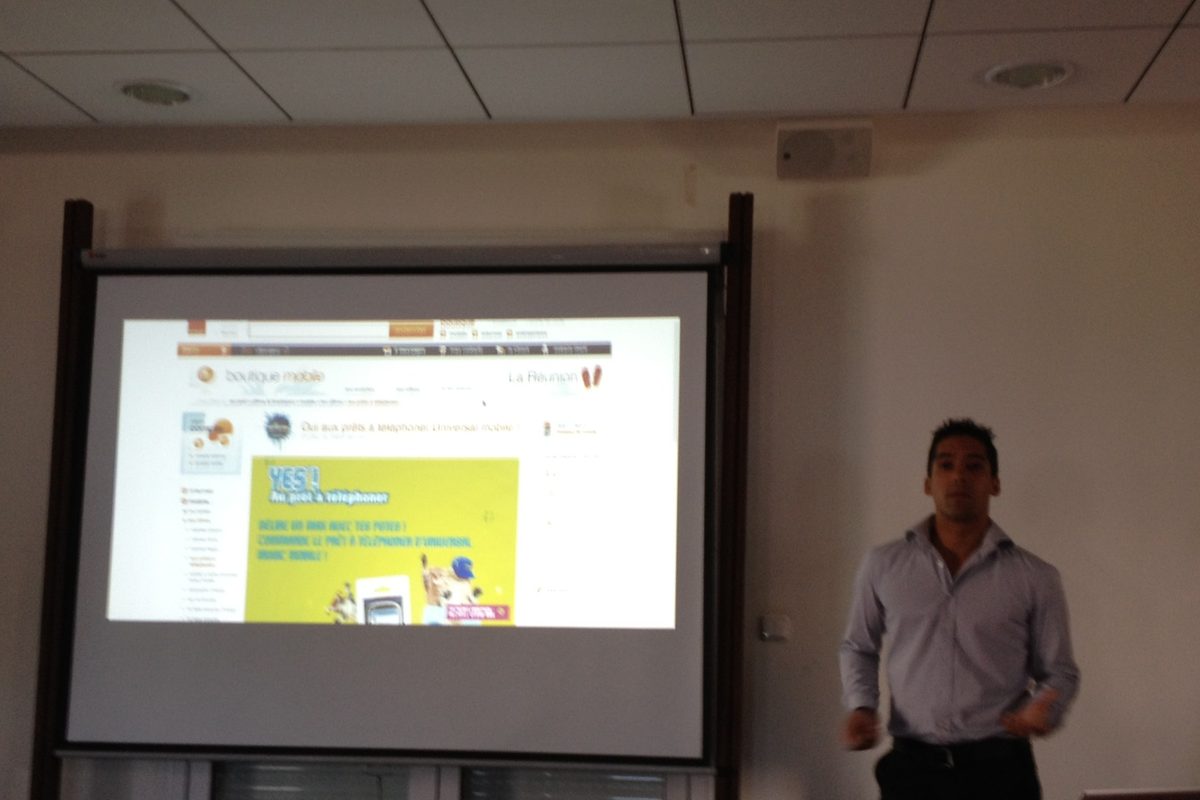
On the agency side, I ran Les Matinales du Digital, a seminar series for advertisers, in 2012 and 2013. I cover them in the digital division case study.
What I kept
A Startup Weekend makes you defend an idea in front of a jury on Sunday night, before you have spent anything. I kept the habit: a short trial, a threshold written in advance, then the decision. I describe it in test town, control town.
And I kept the other side of the table. When a founder tells me about an incubation budget or a contractor who does not deliver, I have lived both.
You are launching a project and want someone who has sat on that side of the table. Request a growth audit
A digital division built from zero, across seven markets, with four creative awards
Building the digital division of Saatchi & Saatchi across the Indian Ocean and Caribbean, head of digital to co-managing director: seven markets, 2011-2017.
ReadHalf the agency's margin came from business I had won
Business development inside an agency: 51% of annual gross margin brought in as new business, target beaten, and next year's budget built on it.
ReadThe full track record
Twenty years, from agency to the African field.
Read